


Safety conversations often jump straight to behaviour – what people did or didn’t do. But that’s just the surface.
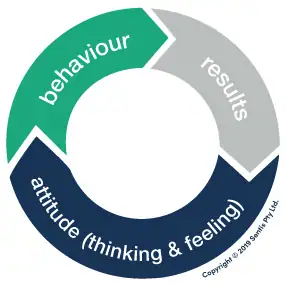
The ABR Model (Attitudes → Behaviour → Results) shows what psychology has long proven: attitudes sit behind everything people do.
They’re the beliefs, assumptions and mindsets that shape how workers notice risks, make decisions, speak up, respond under pressure and look out for each other. And in busy, high-risk environments, these attitudes become the difference between consistency and variability, safety and shortcuts, early intervention and late reaction.
If we want lasting change, we need to start where behaviour begins: with attitude.
What Attitudes Really Are and Why They Matter
Attitudes aren’t fixed traits. They’re learned beliefs shaped by past experiences, workplace signals and the systems people operate within.
Attitudes influence how people think before they act. They colour judgement, shape motivation and determine what feels “normal”, “acceptable” or “too risky”. They operate quietly in the background, guiding decisions long before any behaviour is visible.
Attitudes influence:
- What people pay attention to (or overlook)
- How they judge and prioritise risk
- Whether they speak up or stay silent
- How they respond when something feels off
- How much ownership or responsibility they take
- How they balance production pressure with safety
- How they behave when no one is watching
You can see behaviour. You can measure results. But attitudes are what drive both, long before they show up on a dashboard.
Why Focusing on Behaviours Alone Doesn't Stick
You can encourage safe behaviours through training, procedures, reminders and tools, but without the right attitudes behind them, those behaviours can soften when real-world pressures show up. That’s because behaviours rely on conscious effort, while attitudes operate automatically.
So when deadlines tighten, work feels familiar or the pace picks up, people naturally lean on what they believe — not just what they’ve been told. It’s not carelessness. It’s how the brain saves energy, makes quick decisions and interprets risk.
That’s why behaviour-focused approaches often look strong in audits yet feel unpredictable on the job.
A few examples leaders might recognise:
- You encourage people to speak up, but the belief is “nothing changes anyway”
- You roll out a new system, but the underlying story is “this is more red tape”
- You talk about safety values, but the mindset is “production matters most”
- You offer refresher training, but the quiet attitude is “we’ve done this a thousand times”
Behaviour without attitudinal alignment = compliance only when someone is watching.
Behaviour with attitudinal alignment = culture and the consistent, proactive choices people make even when no one is around, including moments of discretionary effort.
Your Earliest Warning System and How Leaders Set the Tone
Most organisations look to results (i.e. incident data, trends, audits) to understand what’s going on. But results only show what’s already happened , whereas attitudes show what’s coming next.
Attitudes reveal:
- Where complacency is creeping in
- What people truly prioritise
- How they feel about leadership
- How risk is being interpreted day to day
Importantly, attitudes don’t form in a vacuum. They’re shaped by the systems people work within: the workload they carry, the pressures they face, how incidents are responded to, and what leaders consistently model and reinforce. When systems and leadership signal that safety genuinely matters, attitudes shift accordingly. When they signal that production is more important than protection, attitudes shift that way too.
Understanding the beliefs behind people’s actions gives us a clearer picture of where culture is heading. And because leaders set many of those signals, they have an outsized ability to influence those mindsets in meaningful ways.
Leaders might not be able to observe every behaviour, but what they ask about or ignore, how they respond when something goes wrong and what they consistently praise or tolerate shapes how people think about risk, responsibility and speaking up.
When leaders treat safety as a value, not a checkbox, people feel it. When leaders show that attitudes can shift, culture follows. And when leaders set the right mindset, those early warning signs start moving in the right direction.
What's the Attitude in Your Organisation Right Now?
If attitudes drive behaviour, and behaviour drives results, then the real question becomes: Do you know what mindsets are shaping your workplace today?
Attitudes reflect the system. Listening to the attitudes shaping your culture enables you to see the story behind the safety data. It provides insight and clarity on which levers to pull in order to improve the people-factors that impact your business the most: risk awareness, teamwork, incident prevention and sustained performance.
This is the work we love at Sentis: helping leaders understand the psychology behind their culture so they can create workplaces where safety is lived, not laminated.
If you’re curious to dig into the attitudes influencing your teams, we’re always up for the conversation.


