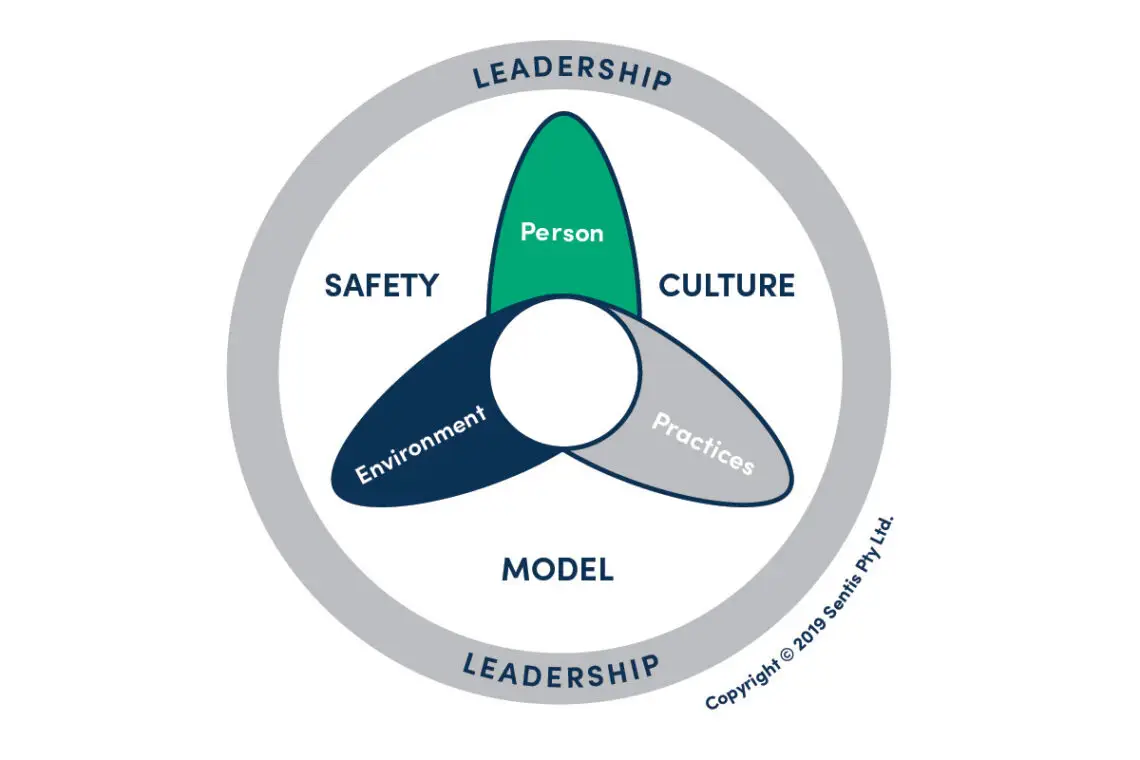
Components of our Safety Culture Model
1. Environment
The physical work environment – ensuring that plant, machinery, tools, equipment, guards and personal protective equipment is accessible and well maintained. Historically, the physical environment has received a lot of attention in traditional safety approaches. Additionally, the psychological and social environment should be positive and supportive (e.g., addressing and preventing workplace bullying and harassment, and providing access to mental health resources).
This component encompasses the physical, social, and psychological aspects of the work environment. The physical aspect includes consideration of areas such as the machinery, tools, equipment, and facilities people interact with, and the psychological and social aspects involve consideration of whether the environment is positive and supportive, where social dynamics and perceptions of organisational matters, such as change, are examined.
2. Practices
Commitment to excellent safety practices includes standard operating procedures that are easy to understand and follow, with a clear understanding of critical risk management processes, and effective training and meeting processes that promote a supportive and safe work environment. Like the environmental component of safety culture, practices have traditionally received a lot of attention, especially when it comes to policies, procedures and laws around how work should be conducted safely.
Commitment to excellent safety practices means considering workers’ physical safety, as well as health and wellbeing in how work is done. It includes ensuring that procedures are easy to understand and follow, there is clear understanding of critical risk management processes, and there is effective training and meeting processes that promote a supportive and safe work environment. It also includes ensuring that there are appropriate practices and policies in place to effectively and proactively support staff health and wellbeing.
3. Person
The person component of safety culture refers to workers’ attitudes, skills, experience, intelligence, motivation, behavioural choices and teamwork. Arguably the most critical, the strength of this area comes into play when individuals are faced with an unpredictable risk or situation that has no engineered designs or procedures to help them manage it. People who work safely and professionally take ownership for their results. They are equipped to identify and manage risks, manage stress effectively, operate, and display an attitude of professionalism in all their work efforts.
4. Leadership
Leadership impacts the overarching business culture more than any other single factor, and therefore is critical for driving strong safety performance. Leaders influence how people experience safety and the person, practices and environment components of safety culture. This component includes management support for safety, the level of consultation that occurs around safety and downwards safety communication. Leaders must be able to model physically, socially and psychologically safe behaviour, encourage others to do the same, foster positive workplace relationships, and support safe work.
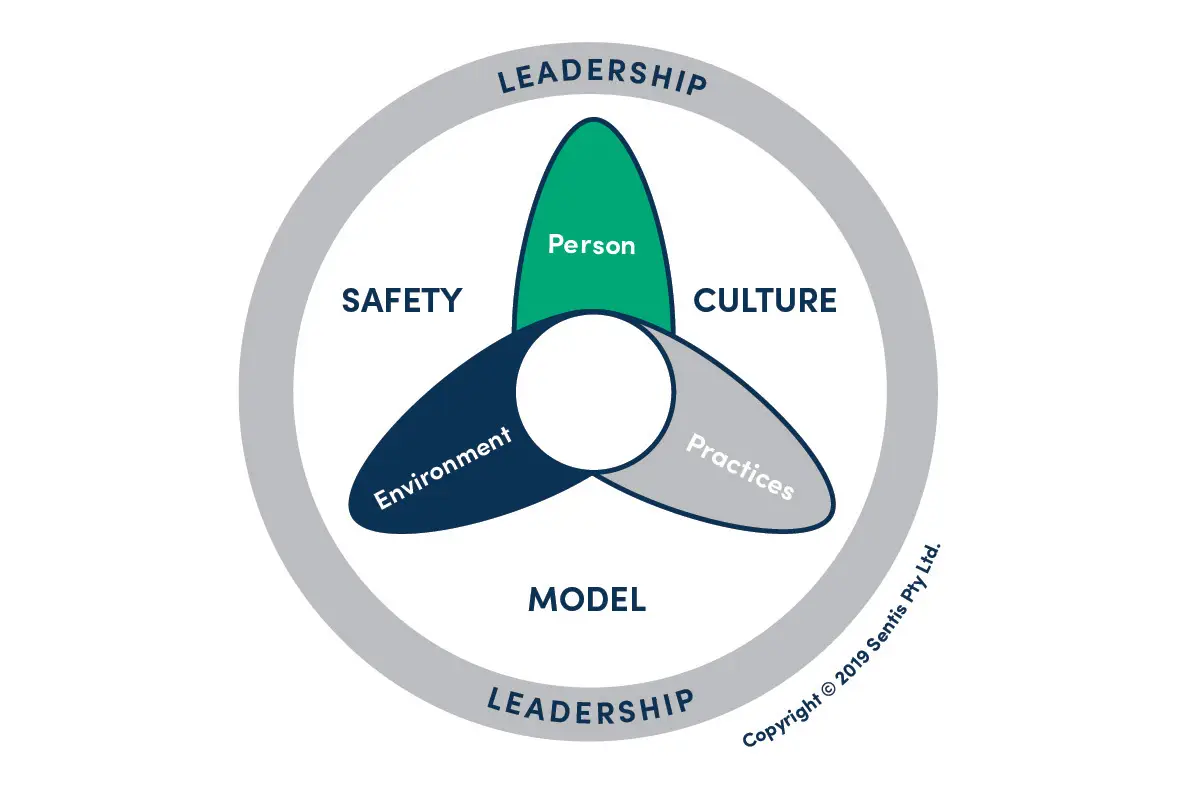
It’s important to remember that there isn’t one single factor that determines safety in an organisation—it’s a combination of all four components that lead to your safety culture. And depending on how these components are functioning, they can be either helpful or hindering towards creating a strong, positive safety culture.
To learn more, download your complimentary copy of Driving a Positive Safety Culture—featuring more than 60 individual recommendations for leaders, as well as a practical step-by-step roadmap for setting up your cultural transformation project for success.